
Viodi View Menu
|
Emotions, Expectations, Win, Win, Win Mobile WiMAX Plugfest & Sprint's Nextel Next Gen Network(pdf) |
| Previous
Issue
|
| Viodi
View Subscribe |
| Viodi Forums |
| Multimedia
Search |
| Viodi Workshops |
| Industry |
| About Viodi |
Interested in Sponsoring the Viodi View? Send an email to: [email protected]
Please forward this free publication to anyone you know who is involved in some way with independent telephone companies.
Mission of the Viodi View:
In this on-line publication, we share our analysis, opinions and direction on the interactive television news and views that we believe will be of interest and use to our friends associated directly or indirectly with independent telephone companies. For more information as to the various ways Viodi works with independent telephone companies, please go to http://www.viodi.com/alliance/
Disclaimer:
The Viodi View [Viodi, LLC] and its associates used their best efforts in collecting and preparing the information published herein. However, the Viodi View [Viodi, LLC] does not assume, and hereby disclaims, any and all liability for any loss or damage caused by errors or omissions, whether such errors or omissions resulted from negligence, accident, or other causes.
All displayed trademarks, logos and service marks are
the property of their respective owners. © 2005Viodi,
LLC. All Rights Reserved.
5255 Stevens Creek, #127 Santa Clara, CA 95051
Viodi View Newsletter - October 18th, 2006

Click here to learn more about the Technology of Local Content Workshop
By Ken Pyle, [email protected], Managing Editor, Viodi View
- Trends & Technology Webinar on Tuesday October 24th
- Emotions, Expectations and Win-Win-Win
- Sponsoring Local Content
- Animation on a Shoestring
- The Merchant's Pumpkin - A Video Contest Entry
- The Best of Hard Times - A Festival Award Winner
- Local Content and Interactive Television - The LA Edition
- More OPASTCO Tidbits – HD via “VDSL Classic”
- Back to the Future - A Hybrid Fiber Coaxial/Copper System
- iHollywood's IPTV World - Some Tidbits
- Mobile WiMAX Plugfest & Sprint's Next Gen Network
- Cable's Fiber is Deeper than Telco's - Wireless Backhaul Opportunities
- Video Asides
- Late Breaking News - Adobe Acquires Serious Magic
- The Korner - An Aha Moment
“Bandwidth is King, while content is Queen”, stated Ed McKell of Horizon Telecom at OPASTCO’s 4th Annual Tech Symposium last week. In this one statement, he sums up the somewhat symbiotic relationship between the content owners and their distribution channels. Whether the path to the consumer is through retail outlets (e.g. Walmart), high-speed Internet or IPTV systems, content and distribution are intertwined. The underlying challenge for independent telcos is whether IPTV, at least in its “traditional” form, will provide a timely and cost-effective business solution.
Speakers at the OPASTCO Tech Symposium explored these and other issues related to video delivery. Just as valuable as the commentary from the speakers were the hallway conversations. One of the impressions is the uncertainty that grips the industry will not leave us anytime soon. Some are questioning whether or not it makes sense to get involved with video at all; at least in the franchised approach that seems to be a fixation of the industry. Things are definitely not yet cookie cutter, so any sort of educational forum, such as OPASTCO’s Tech Symposium, is very valuable.
Emotions, Exceed Expectations and Win-Win-Win
Win-Win-Win was a common theme of the speakers at the Technology of Local Content Workshop, which preceded OPASTCO’s Tech Symposium. Both Mary Wilder and Tim Mahoney of Mahoney Media emphasized the importance of finding ways that a particular content production will benefit potential sponsors, talent and filming partners (e.g. site locations). They stressed the importance of flexibility and creativity gave examples of how they were able to create partnerships that allowed a production to move forward by removing budget and other roadblocks. Club Viodi members, click here to read the rest of the article.
|
I am proud to say that Viodi was able to remove a budget roadblock to bring the Local Content Workshop to Minneapolis. It started with cross-promotion with OPASTCO [thanks OPASTCO], which was very helpful in getting the word out to its membership. Our workshop sponsors, Entone and Tut Systems, were pivotal in helping Viodi bring together this workshop that consisted of a select group of independent telco industry leaders. Keith Wymbs of Tut Systems briefly discussed Tut Systems’ local content solutions for independent telcos. Gerry Pearce, Vice President of
Sales for Entone (formerly of Next Level/Motorola),
was unable to change his schedule and could not make the conference.
Through some very low cost production techniques, we were able to
take his voiceover and overheads create a sponsor message which
we played at the workshop. To see what we did, click
here. |
The only disappointing thing about the workshop was we needed more time. Roger Bindl had a great presentation on a very low cost animation technique he has developed which a telco could use in a number of different ways. Animation has a number of advantages over film, as there are fewer releases required and one does not necessarily have to deal with actors, lighting, sets and all of the other things that makes video production challenging. We have decided to package Roger’s techniques and they will soon be available as canned lessons.
The Merchant's Pumpkin - A Video Contest Entry To see Roger’s latest animation effort and to help him win a very important prize, click here. Be sure to watch the entire video and click on the ad, so he can get paid $0.38 from Revver. .
|
|
The Best of Hard Times - Festival Award Winner And congratulations to Roger Bindl for his award winning documentary, “The Best of Hard Times.” This short film took the prize for "Best Depiction of the Generation as Adolescents in the 1930's" in the Minnesota Historical Society Greatest Generation Film Festival. We have some ideas as to how independent telcos could join us as part of next year’s festival. Independent telcos, email us for more information. Click here to see the video. |


|
|
||
| Local Content and Interactive Television – The LA Edition What excites me about the Local Content Workshops is that each one is different and the telcos all bring different perspectives and ideas. With representatives from over 60 telcos, we have a library of ideas, videos and techniques that could fill a couple of days. |
||
Our next Local Content Workshop is November 16th in Los Angeles and will coincide with the DV West Expo. DV West is a great venue to see the low cost production equipment that independent telcos need to make the business case for local content. Special arrangements have been made with the organizers of the DV West Expo, such that Viodi attendees can receive a 10% discount on the DV West event. Attendees could make a weekend of it and go to the Interactive Television Alliance's Tech Walk. Viodi has negotiated discounts for Local Content Workshop attendees. The ITA events are an excellent way to get an insider's view of the direction of the major advertisers, distributors and technology companies. This event is limited to only 100 executives and is an excellent opportunity for a telco person to meet and mix with a crowd that brings perspectives that are different than what is heard at the typical telco trade show. |
||

More OPASTCO Tidbits – HD via “VDSL Classic”
Lots of interesting gems at OPASTCO’s Tech Symposium, including the announcement from Horizon Chillicothe Telecom’s that they are delivering HDTV over their ATM VDSL system. Ed McKell of Horizon Chillicothe suggested that Caller ID on TV was a killer application. Ed Knudson, SVP Marketing Americas for Open TV, gave numerous examples of interactive television applications that Dish Network has already deployed.
There were several speakers who talked of the challenges of making money on video – in fact, one stated that they, “haven’t made a dime on video in the 20 years since they had a franchise.” He did say that if they had not had video, someone else would have offered video and would have used that platform as a way to steal profitable voice and data customers. Or, as Larry Thomson, CEO of Vantage Point Solutions, said, “Do a business plan to see what happens if you don’t [have video].
Back to the Future – A Hybrid Fiber Coaxial/Copper System
One audience member asked one of the panels when at what point will IPTV be a financially viable replacement for his 500 subscriber cable television system that uses one-way coaxial plant. His system uses copper for telephony/hi-speed Internet and coax for broadcast video.
It seems like a telco could fashion a system that used the RF for the downstream and DSL for the interactive path – much like Verizon’s FTTH approach. What would be required would be a set-top with an RF port for broadcast and an Ethernet port for interactivity. The biggest challenge for a very small system would probably be the costs of the headend components and controller for such a configuration.
Does anyone know of a telco that has tried this approach? If so, let us know by sounding off in the Viodi forum.
iHollywood’s IPTV World – Some Tidbits
This iHollywood conference lived up to its name as it brought together a mix of executives from around the globe to discuss the various challenges and opportunities surrounding IPTV. Bryan McGuirk, President of North American Media Solutions for SES Americom, suggested that, “Integration is the big challenge…..trend towards vertical integration in terms of vendors.”
Along those lines, Dean Kashlan, General Manager and Vice President for Latens Americas, said that “fragmentation in standards….really hampering [roll out of IPTV]. He did suggest that integration is improving, but intimated that IPTV is behind in features when he suggested that an HDTV PVR is needed.
Richard Yelen, General Manager of IPTV for Globecast took a bit of a contrarian view when he asked the question, “Can telcos afford to wait?” He stated that if you are trying to protect the relationship, then you probably need to build fiber to the home and use a proven technology [implying MPEG-2].
One panel that was very unique was a focus group of “typical consumers”, which was led by Lynn Rowe, CEO of One World Technologies. This panel might have been a bit skewed as the panelists all hail from the greater Silicon Valley area. The technical sophistication of these panelists was a bit humbling and the number of electronic devices each had was surprising. If they represent the coming demand, then the need for technologies like IMS [IP Multimedia Systems] and the increased bandwidth offered by FTTH will be critical.
WCA Leadership Briefing Highlights Interoperability From Mobile WiMAX PlugFest and Sprint Nextel’s Next Generation Wireless Network
WCA’s one-day Carrier & Enterprise Leadership Briefing was co-located with WCA’s Fall 2006 Board of Directors meeting. It was held on October 4, 2005 in Reston, VA. The purpose of the one- day conference was for industry leaders most active within the WCA to share insights with one another following a summer of momentous developments in the broadband wireless industry. Selected members of the trade press were also invited to attend this important one-day conference. Click here to read about Sprint Nextel's plan for implementing WiMAX.
Cable’s Fiber Is Deeper Than Telco's - Wireless Backhaul Opportunities
According to a study about to be released by Narad Networks, a leading provider of Carrier Ethernet solutions for the access network, and Stratsoft LLC, a communications industry business and technology consultancy, cable, with their 500 home fiber nodes, generally has fiber deeper in the network than do the telcos (at least the big ones – probably not the case for the independents). The cable industry’s fiber deep archictecture could be a big opportunity for Cellular and WiMAX back-haul. Narad and Stratsoft, LLC will be presenting this report at the Society of Cable Telecommunications Engineers (SCTE) Business Services Symposium. |
|

Jeremy Toeman moved on from SlingMedia and has struck out on his own. He has an excellent web site Living Digitally that has reviews and commentary regarding all of the cutting edge, digital gadgets. He is available for consulting.
Brian Sugar, who was with 2Wire, is a guy who was this close to speaking on a panel I had organized some years back. It was disappointing he could not participate, because his strong opinions would have made for a lively panel. He has channeled his energy into a new venture Sugar Publishing that is a sort of an interactive, online People Magazine. With over 12 million monthly page views from a collection of web sites geared to the 18 to 35 year old female, Team Sugar has definitely tapped into a lucrative market.
Stephen Colbert nails something that Roger has been talking about for months now; that is, the backlash to YouTube among content creators who are not compensated for their efforts.
Kudos to the Muhammad Yunus, founder of the Grameen Bank, for his invention of the microfinance industry. Read the review of an excellent movie about microfinance and the positive impact it is having on the poorest of the poor in the article from a few months ago.
Late Breaking News - Adobe Acquires Serious Magic
Great news for fans of these two video editing programs. Serious Magic has a great chroma keyer, as well as some video production tools that are unique and great for the cost conscious customer. Combined with Adobe's Premiere video editing and Flash product lines, these tools could bring user-generated content to a new level. Both of these companies were sponsors of Viodi's Content Pavilion. Congratulations.
The thing about conferences is it is sometimes a challenge to pay attention, because so much of what is espoused has been said before. I have been listening to NTCA’s recording of Barry P. Woolf, Principal of Training Works the last few days. He provides some good insight as to how get the most of a conference or workshop. He suggests keeping an “aha page” while at a conference. This is where you record the “keepers” or ideas that you want to try.
One gem uncovered at OPASTCO’s winter conference came from the mouth of Sam Harlan, Director of Client/Video Services for CHR Solutions. He used the term Virtual Headend to describe entities like SES Americom/NRTC, Auroras Entertainment and others who are providing headend services for independent telcos. For more than a year now, I had been suggesting Satellite Headend In The Sky to describe these entities. For some reason, maybe because of the acronym, that moniker was never widely adopted . I think I will stick to Virtual Headend.
On a more serious note, there are lots of players in the Virtual Headend business, including the aforementioned as well as other players like Optical Entertainment, Globecast and HBC (soon to be serving Guam) that are using fiber to provide cable. Falcon Communications is showing an interesting model, in partnership with Telechannel and other, whereby they provide a complete headend that promises to be quite cost-effective. There will be more about headend alternatives for independent telcos in a future article.
Viodi View Subscribe


 ViodiTV DVD More Info

The Video Business Case for Independent Telcos – The Report
Viodi’s report, Video Business Case provides results to a survey of independent telcos and their business case for video. Most of the telcos that responded to the survey have figured out a way to deploy video services. This survey provides insight from the independent telcos as well as several of their Engineering firms.
Local Content Workshop
November. 16, 2006

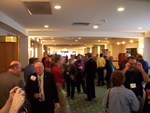
Pictures from OPASTCO's Tech Symposium